Saturday, September 26, 2020

Flutter By

 If you want to do something small but tangible to support the natural world, plant some fall-blooming flowers in your backyard (or your front yard, or in pots on your balcony) to provide food for migrating butterflies. Right now I've got goldenrod blooming in my yard (front, back, side, everywhere), and today I had a delightful visitor:
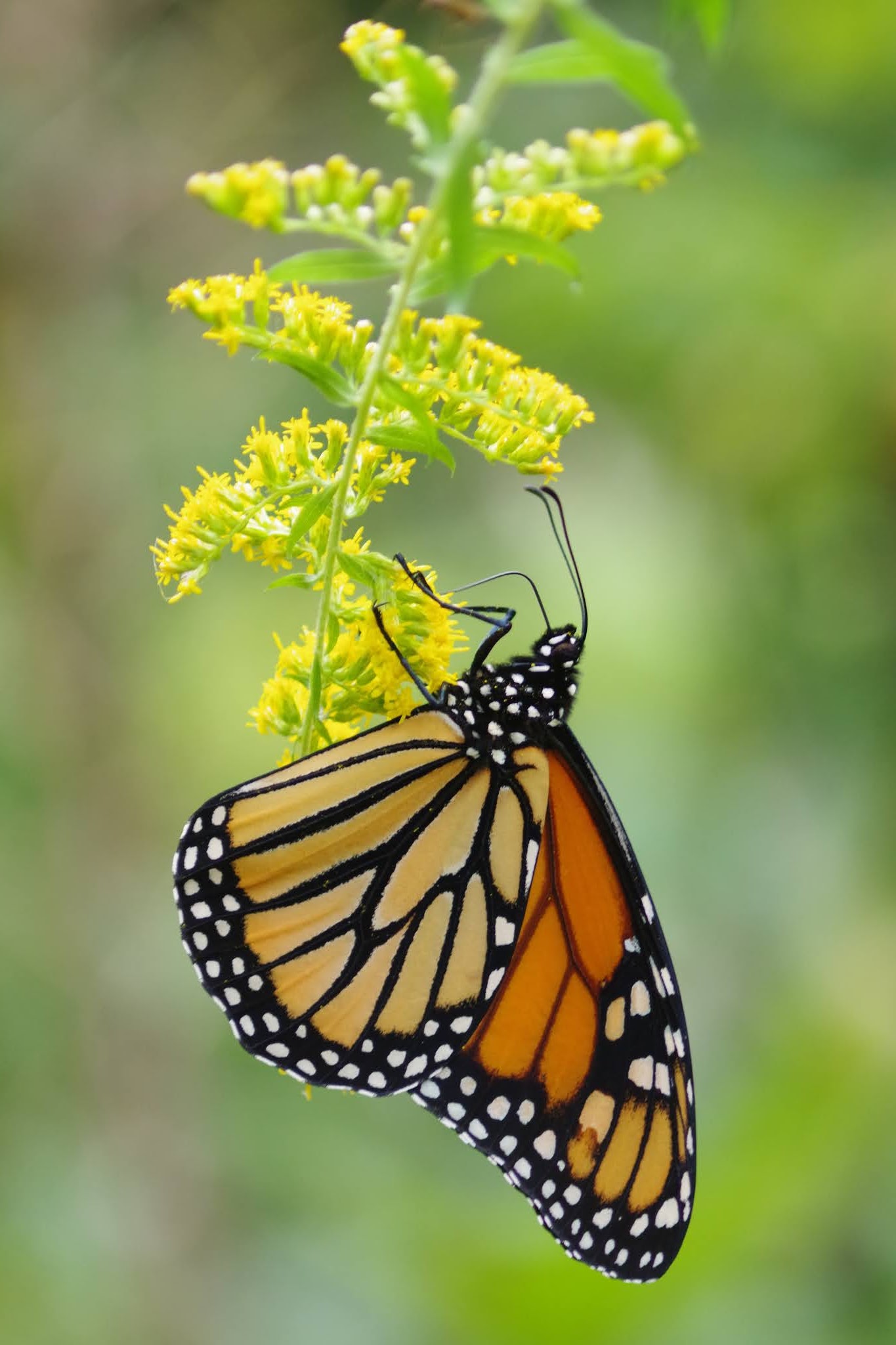
Monarch butterflies are on their way to Mexico for the winter. This one is is excellent condition, so she must be recently eclosed. She visited a patch of goldenrod to fuel up for the long journey, and stayed around for a couple of hours. During the summer when I see monarchs they stop in the milkweed patch for short stays, either feeding from flowers or laying eggs, and are gone in no time. This butterfly took advantage of the food source to eat her fill, flying from plant to plant and feeding quite determinedly. Even when I might briefly frighten her away by walking by, she would come back for more goldenrod nectar. She got energy for her journey, and I got the pleasure of watching her.

I don't have a Backyard Bug of the Day today, because nothing qualifies.

But as for other visitors, today in my mailbox I got two magazines, three solicitations from charities, a credit card offer from a bank, and three stinkbugs:

While monarch butterflies are flying south toward warmer climes, this is the time when stinkbugs (brown marmorated stinkbugs, anyway), start looking for shelter. Often they end up in houses. I have never been able to figure out how bugs get into the mailbox. Two of them were gone by the time I went out for my bug walk, but this one remained.


Stinkbug
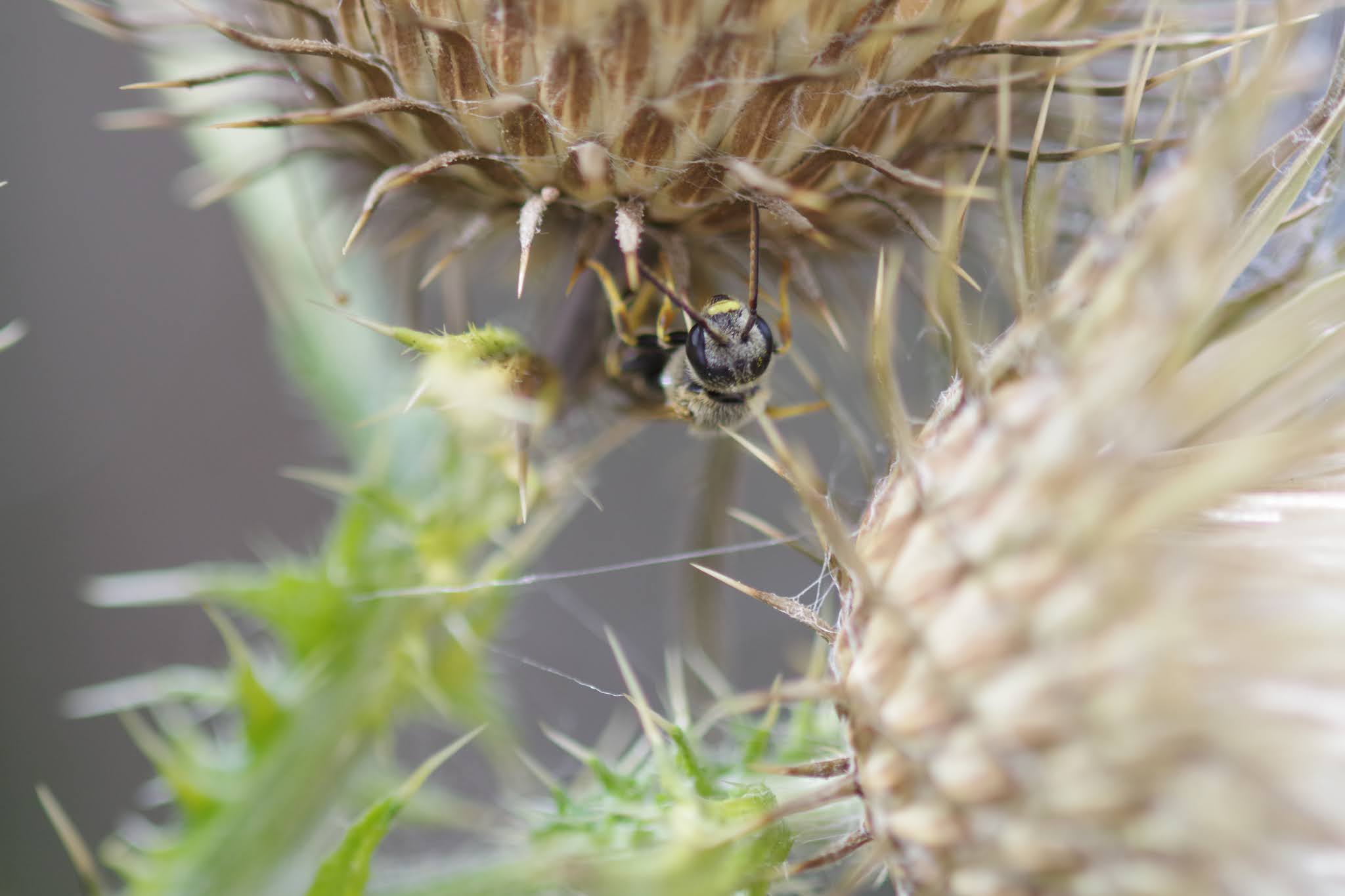
I found yet another bee on one of the thistle blossoms that has gone to seed. I still have no idea what they are getting from there. There are several flowers on the plant that are still blooming or about to bloom, so why go for the ones that are finished?

The thistle plant was pretty crowded today. Can you find all four of the insects on this leaf?

It could be tricky, since only one of them is fully in focus. There's a leaf hopper and two ants (and I didn't get better pictures of them, so you'll just have to find them in this shot), in addition to the extremely obvious lady beetle.

There were several sharpshooters on the thistle plant. Taking pictures of insects on the thistle plant is challenging because it sways a lot in even the tiniest breeze, and the whole plant is spiky, so it's hard to get close to anything.

A trio of leaf hoppers


Stinkbug nymph

Three instars of large milkweed bugs

A jagged ambush bug hiding among the goldenrod

Candy striped leaf hopper

Beetle and bee

This particular species of leaf hopper isn't one I have seen very often in my backyard in the past, but I have seen them quite a bit this year. Maybe the only insect I have seen more of this year.

Backyard Amphibian of the Day:

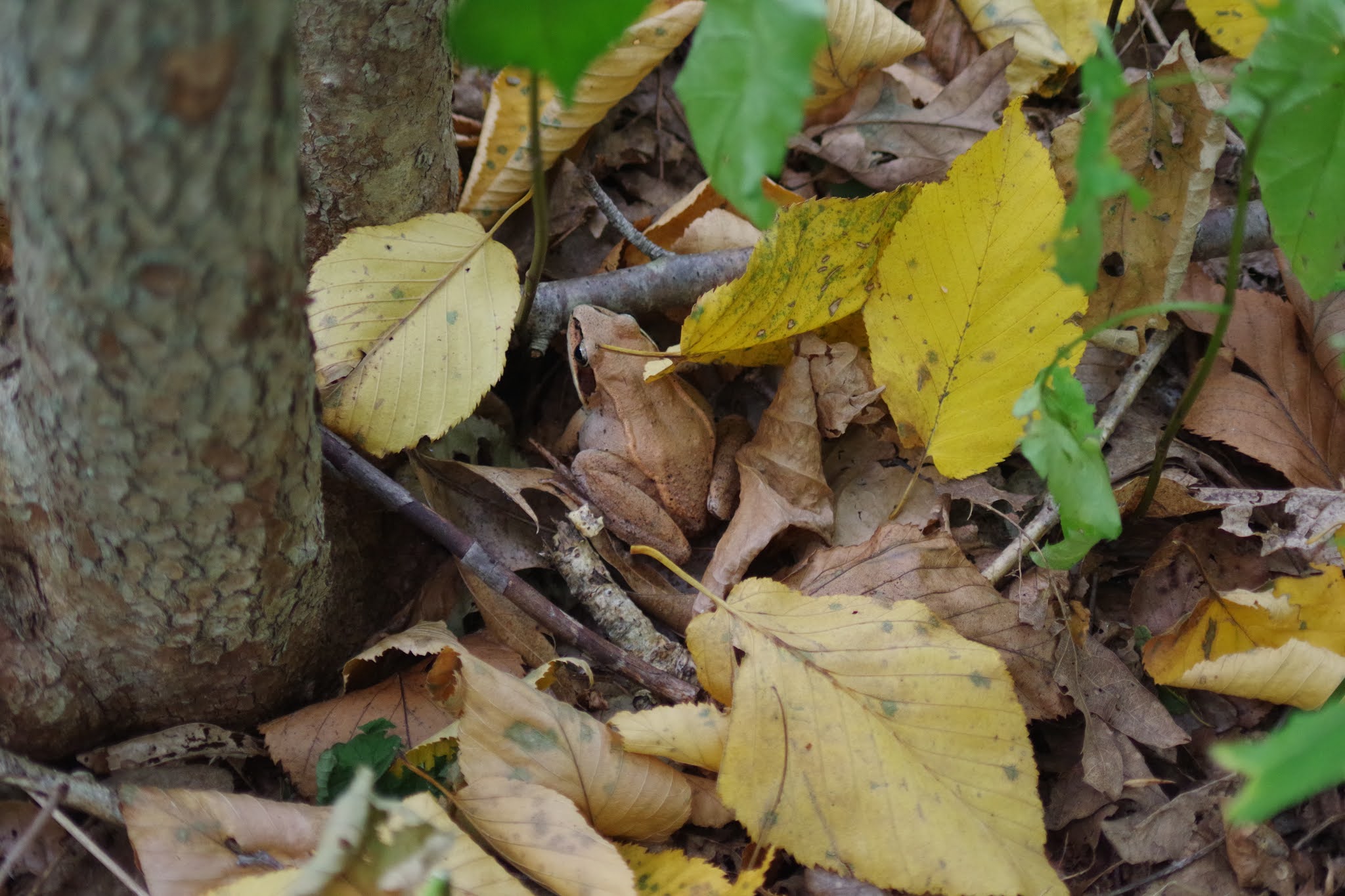
Wood frog, demonstrating its cryptic adaptation, which is a fancy way of saying it blends in really well with the fallen leaves.


I found a lot of crab spiders today for Arachnid Appreciation:

.

.

.

.

.

.

.

.

.

.

.

.

Unfortunately, most of them were averse to having their picture taken:


Friday, September 25, 2020

Season of Confusion

 Today, a nice, warm, summery autumn day, I give you…

Backyard Bug of the Day:

Winter firefly. Which, in spite of the name, is not exclusive to winter. Nor does it light up like other fireflies; it is diurnal (active in the daytime).

The leaves are starting to change color, but on a lot of the trees, due to the drought, they are just shriveling up and falling off:

The normal pattern is: change color, fall off tree, dry up on the ground. The current pattern is: dry up, fall off tree. It is mostly saplings and other smallish trees that are doing this, but there are a lot of them. According to the drought maps, we are in severe drought, while other parts of the state are in extreme drought, but I think we have actually gone that next step into extreme drought. I have never seen this happen, even in other years when we have had drought. A lot of other plants are wilted and drying up, like goldenrod and creeping myrtle (and bittersweet, but since that is invasive I don't care). It's worrisome. And I have been wondering if the drought is at all responsible for the low numbers of insects I am seeing this summer. Particularly for insects that feed on fluids from plants it cannot be good that the plants are suffering from lack of water. And this stresses the trees and leaves them vulnerable to disease and insect attacks from things like gypsy moth caterpillars. One reason so many trees died in the most recent gypsy moth outbreak is because they were already stressed from two years of drought (though that drought was not as severe as this). It is strange that I am personally so stressed out right now and the trees around me are also in distress. I wish I could help them, but I can't water a forest, or even my entire backyard.
 

Due to time constraints I had to rush through my bug walk today, but even so, I didn't find a lot of Other Bugs:

Large milkweed bug on a leaf that has actually changed color

Jagged ambush bug. I don't think it appears so in photos, bu these really do blend in well on the goldenrod plants.

Assassin bug with what looks like a sweat bee prey

Arachnid Appreciation:

.

.

.

.

.

.

.

.

.

.

.

.

Goldenrod crab spider (I think)


Thursday, September 24, 2020

Autumn Romance

 Love was in the air in my backyard today. Or under the leaves, anyway. Some insects have a distinct, short mating season, but some of them (and I could be completely wrong about this) seem to take the entire not-freezing portion of the year to propagate the species. Given that different kinds of insects overwinter in different ways, as eggs, larvae, pupae, or adults timing for creating eggs can vary. Katydids, for instance, lay eggs that don't hatch until the next spring, so mating continues into the autumn. But luna moths have about a two week period in June during which they look for mates and lay their eggs (though in some climates there are two generations of luna moths). So here it is, early autumn, and for two different species of assassin bugs…


For this assassin bug, food was more important:

It's not eating in this shot, but I found it walking on the ailanthus webworm web, and leaving behind a caterpillar that I think it had just finished feeding on. It would be an easy assumption to say that for insects it is always feeding season, but that's not the case. The aforementioned luna moths, for instance, don't have digestive tracts, or even mouths, in their adult form; they do all of the eating for their lifetime during their caterpillar phase, and store up enough energy to last their two weeks or so of adulthood. 

Backyard Bug of the Day:

Fly. I can't really tell, and I didn't want to make her fly away by getting too in-your-face, but her odd posture makes me think she may have been laying eggs. But I don't even know if this is even a female.

Other Bugs:

Wasp on goldenrod. There were quite a few wasps on this goldenrod patch today.

If this katydid was looking for a mate, he had very bad timing. There was a female katydid on this very plant last night, but not today.

Green stinkbug

Jagged ambush bug

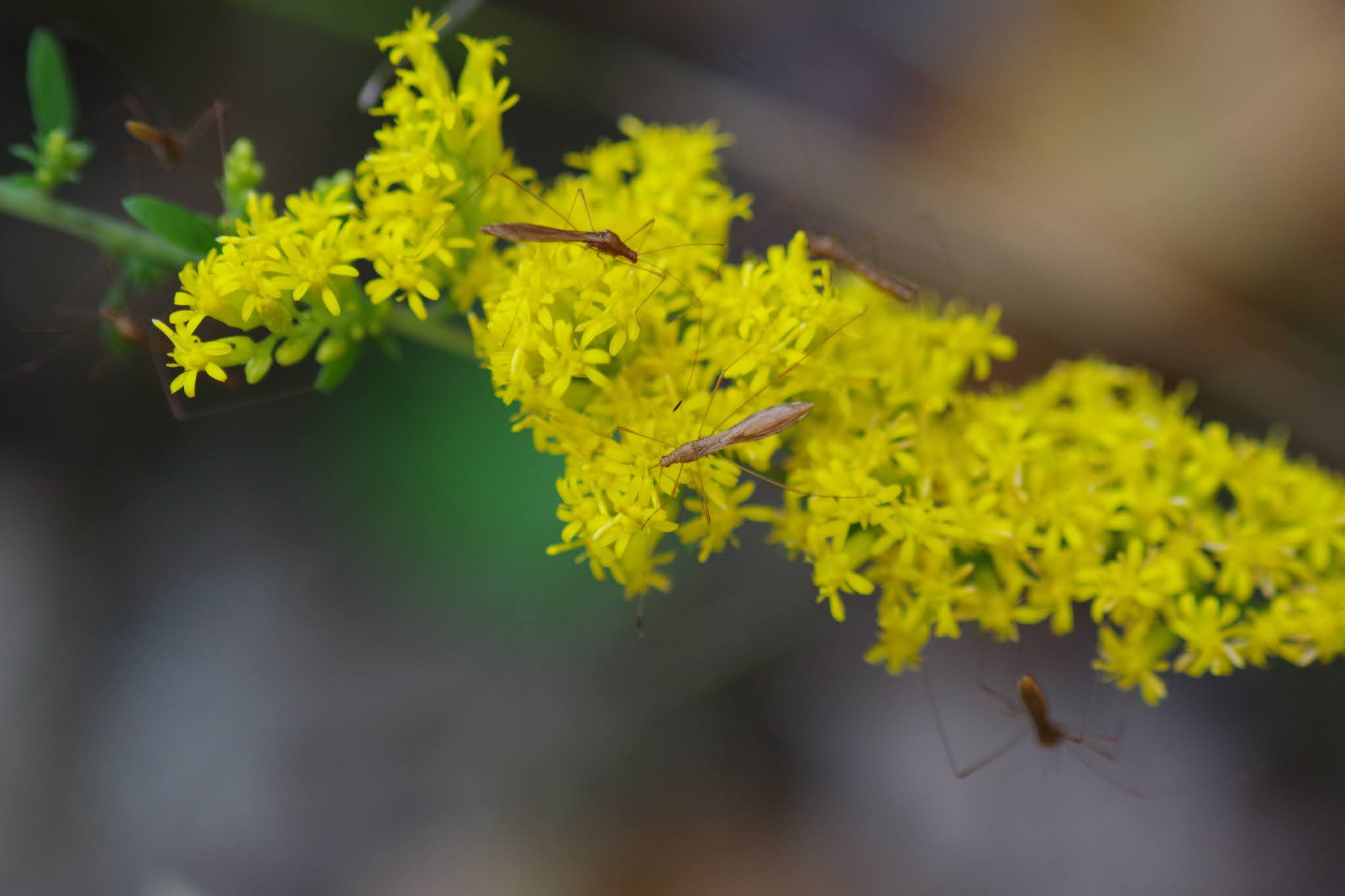
There's more than just stilt bugs on this goldenrod…

I didn't notice the wasp when I took the picture. I could barely even tell if there was something there when I saw it on the computer.

It was terribly windy again today, as it has been all week, and it interfered with my photography (as it did all week), so though I saw a lot of bugs (mostly bees on goldenrod), you have now seen the only ones I managed to get fairly in-focus photos of.

Arachnid Appreciation:

.

.

.

.

.

.

.

.

.

.

.

.

This bumblebee landed directly in front of the spider and quickly changed its mind about where it wanted to feed. It happened too fast for me to see what the spider's reaction was.


Wednesday, September 23, 2020

A Walk In The Dark

 It's the second day of autumn, which means that the weather has decided to assert its right to make independent choices about how to behave, regardless of season, and so we have gone back to summer weather. While looking at my pictures from my bug walk this evening, and seeing how truly disappointing it was, I was reminded of the big spider that has not spun a web all week because it's been too cold at night, and I decided to go outside and check if she's building one tonight. To my dismay, she was gone. But then, in the dark of night, I decided to do another bug walk, and ended up having a bit of a Lepidoptera Lollapalooza, but not due to the porch light. I walked around the backyard with the ring light on my camera, checking out the flowers that are in bloom, and found quite a lot of moths–and a few other insects, too. My afternoon bug walk provided 75 pictures. My nighttime bug walk provided about 130.

Backyard Bug of the Day (Night):


And the other night bugs:


Some kind of geometer moth

Plume moth

Ah, one of the most difficult species of moth for me to photograph during the day; it was more cooperative tonight. Grape Leaf Folder moth.

Dorsal view

 It wasn't all moths that were out tonight:

A couple of female meadow katydids

Earwig

Ladybeetle. It's hard to see, but there are tiny aphids there and the ladybeetle is eating one.

Mosquito, male. Male mosquitoes don't bite, they only feed on flower nectar.


Some kind of Hemiptera on a tree branch


Another Hemiptera on goldenrod, which, as you can probably tell, is where I found most of the bugs on my night bug walk.

Not this leaf hopper, though, which was on the side of the house.


Stilt bug

I didn't find nearly as many insects during the day, except for stilt bugs:

Bugs in general may be down in numbers this year, but I don't think I have ever seen so many stilt bugs.

Stilt bug on thisle


This moth is so small that when I saw it flying from leaf to leaf I thought it was a fly, because I could not see its features well enough to determine otherwise.
 

Large milkweed bugs, nymphs and adults, doing what they do: sucking fluids out of milkweed seeds.

Arachnid Appreciation:

.

.

.

.

.

.

.

.

.

.

.

Nursery web spider on autumn joy sedum

And another

The orb weaver in its bower; it was there this afternoon, so I assumed it would be there this evening, but it must have decided to go elsewhere to build a web.

Though I didn't find the orb weaver I was looking for, there were quite a few spiders, of various species, on the prowl in the dark tonight: