I've been trying not to be so complainy about the weather, but... WHY DOES IT HAVE TO BE SO HOT ALL THE TIME?
I am already pining for next spring, my favorite season. Actually, all I want is some normal weather, no matter what season it is.
Backyard Co-Bug of the Day #1:
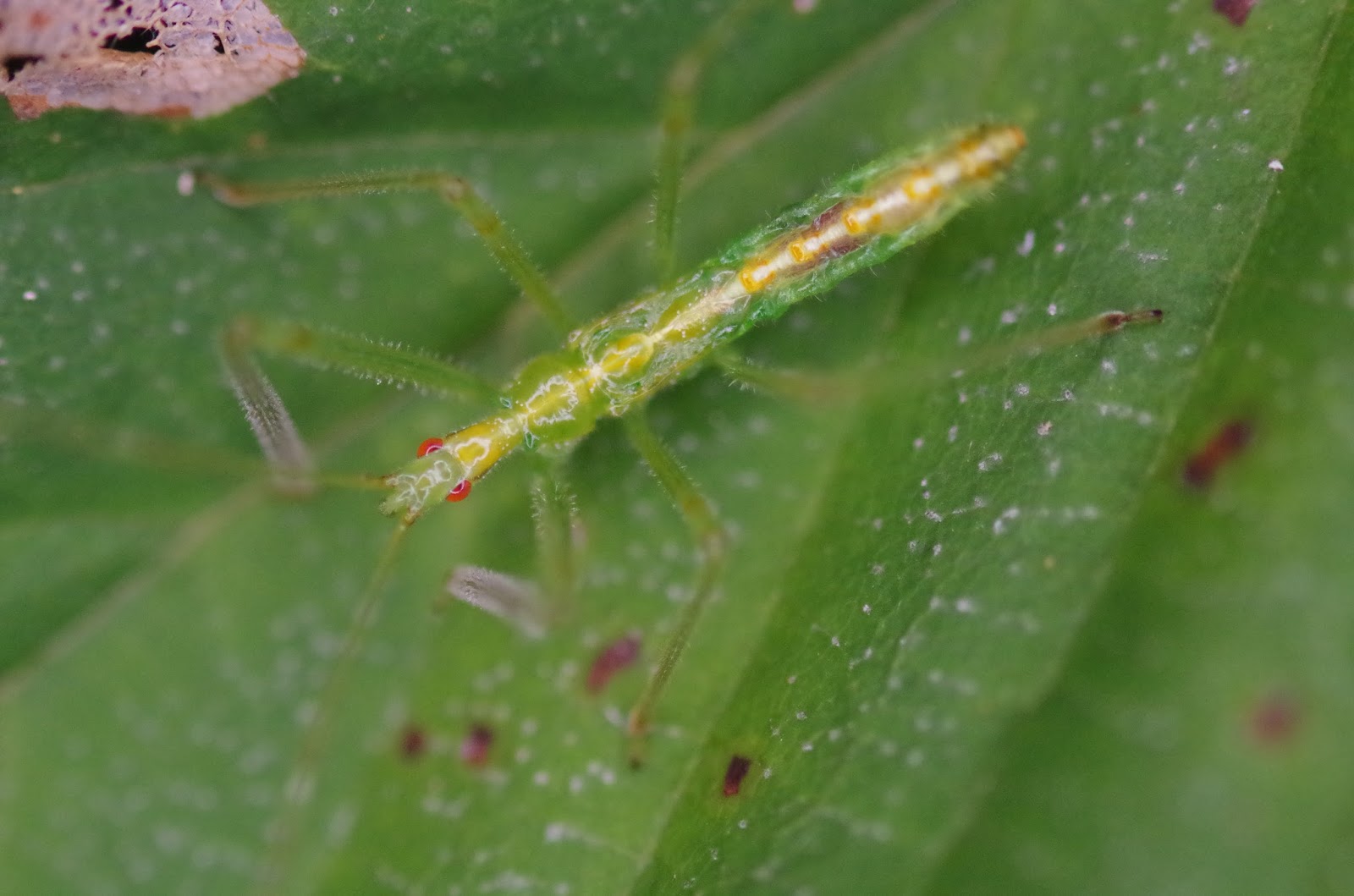
Leaf hopper. I haven't seen a lot of leaf hoppers around lately. I blame the drought. I saw a few today, though, and here is one of them.
Backyard Co-Bug of the Day #2:
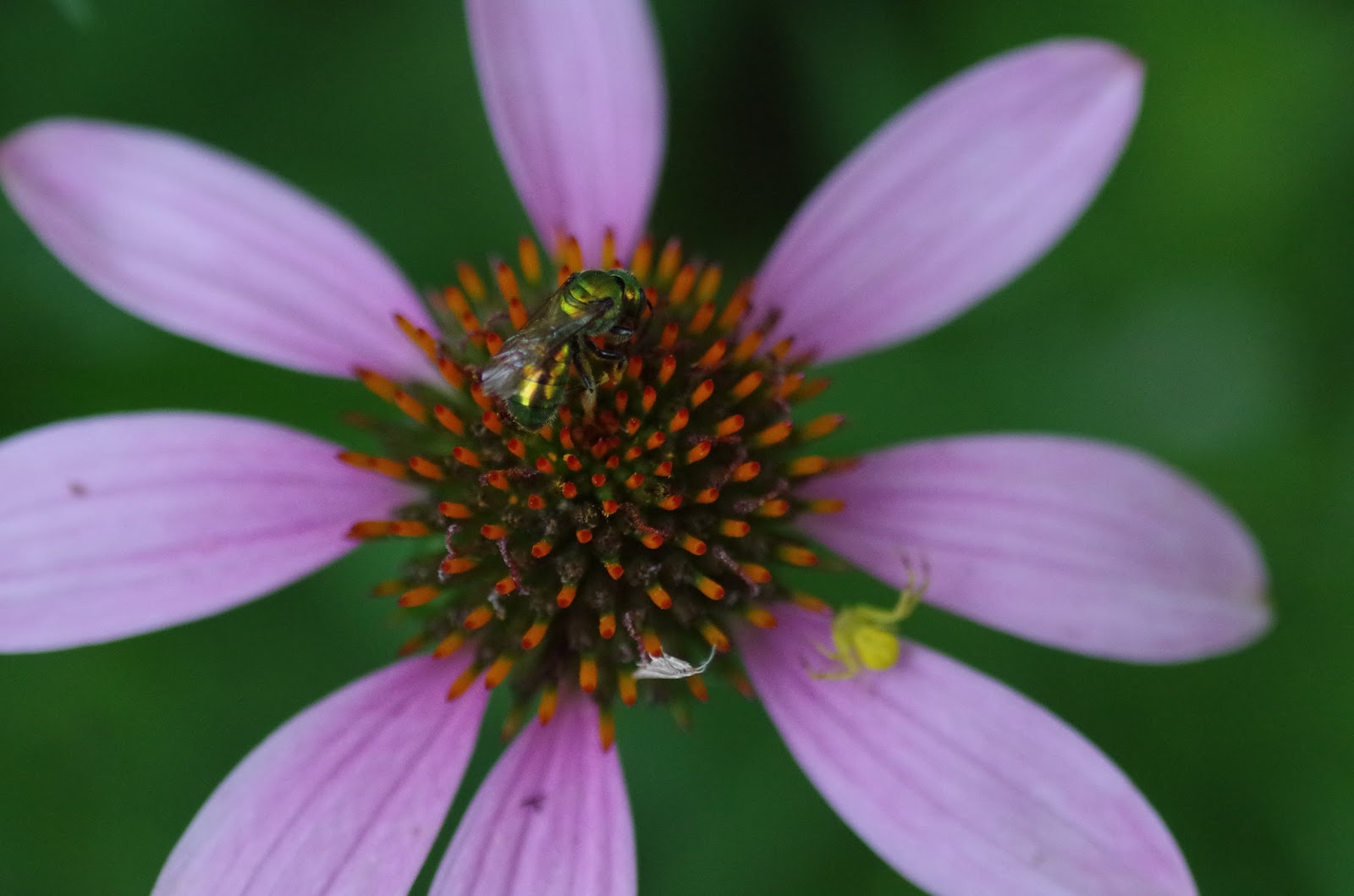
Really tiny moth. More on this later...
The moth was not alone on that flower. Here's one of its neighbors:
Lots of bees around lately.
Here's the sapling where the caterpillars I have been obsessed with lately have been living. Note the lack of leaves at the top. There aren't many leaves left on the plant.
You can see a couple of caterpillars here, but there are fewer today than there were yesterday.
This is at the top of the plant, a curled up leaf.
There's an opening at the top of the curled up leaf, and looking inside, you can see one of the caterpillars inside, ready to make a cocoon. I am not sure if it will be eclosing this summer, or if it will overwinter in there. It could do either, and I am not sure at what point in the summer it would decide one or the other.
I have done some investigating about this caterpillar. The first time I saw a caterpillar with tails like this, I looked up to see if it was venomous, like some caterpillars are. I wanted to make sure that while taking pictures I was not going to be jabbed with a venomous barb from the back end of the caterpillar. I found out that they are not venomous, and those tails are not going to stab me, but...
... See that little spike? I have now read that they can spray formic acid. So, not venomous, not going to stab me, but I should still probably try not to annoy them too much.
After getting these pictures today I am sure that this is a black-etched prominent caterpillar (which refers to how the moth looks, not the caterpillar). It is
not in the genus Furcula (it is in the genus Cerura), but it is in the same
Family as the furcula - Notodontidae, or the Prominent family. I feel kind of silly that I couldn't figure this out before, but in my defense, this caterpillar did not look like the picture in the book until the last few days. This is why I think caterpillar books should show all the instars. Sometimes when you find a caterpillar it doesn't look the way it is eventually going to look, in color and sometimes even shape, and it's usually the last instar that's in the books.
Sharpshooter
Hopper
I think this is a spittle bug
Discarded exoskeleton from a stinkbug
Weevils
Looper caterpillar
There is a huge rock in my backyard that is often covered with tiny bugs that zoom around in unison, but in random directions. There were a huge number of them today. It looks like either different species, or different stages of development are represented here, because they are different sizes. Oh, and one bug that is different altogether (that looks like a tiny rove beetle, but I didn't get a close enough look to know).
It's nearly impossible to get a good picture of these, because they scatter when I get close with the camera. But here you can at least see two different sizes of the bugs.
Small milkweed bugs in various stages of development.
Wasp
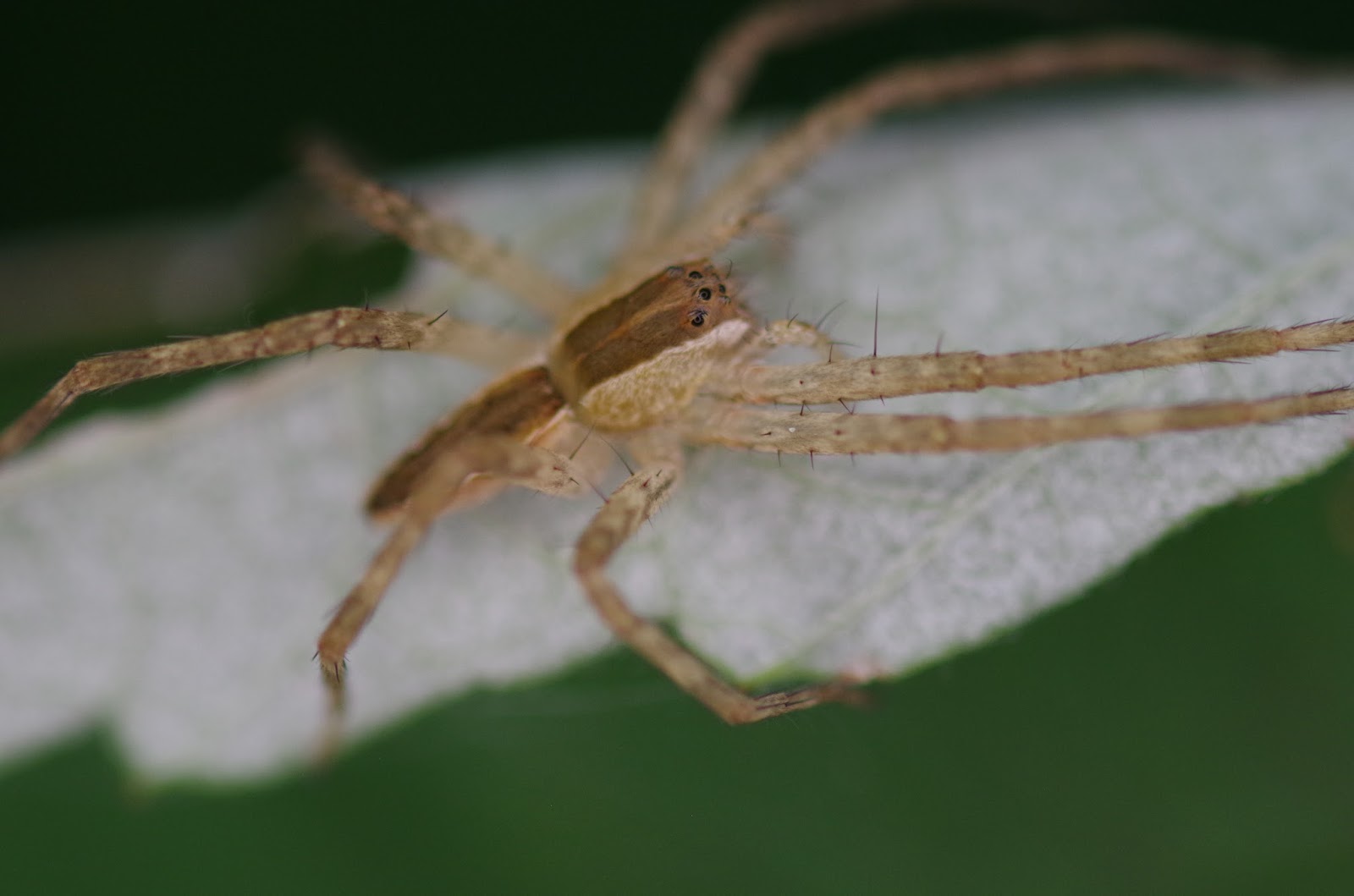
Arachnid Appreciation:
.
.
.
.
.
.
.
.
.
.
.
.
Here's the Backyard Co-Bug of the Day with one of its other neighbors. Remember the yellow blob in the background of the picture? Well, you probably didn't notice it, but you can probably tell here what it was...
A flower crab spider. The spider was facing the other way when I leaned in to take its picture, but before I did, I saw a tiny bit of movement, and apparently so did the spider - it was the tiny moth landing on the flower, and the spider turned around to face it. It was a bit out of reach for the spider to catch, but I think it was trying to be ready in case the moth flew closer.
Kind of crowded on that flower.